

The Battle of Seven Pines took place on May 31 and June 1, 1862. Union General George McClellan had been advancing up the Virginia Peninsula between the York and James Rivers, to attack the Confederate capital of Richmond. They had finally arrived within a few miles of the city. They were so close they could hear the church bells ringing. General Joseph Johnston was in charge of the Confederates at this time, and he was pressured to attack the Union and defend the city. The Union troops were divided by the rain-swollen Chickahominy River. On the south side of the river, some of the Union troops had moved to the small town of Seven Pines. Johnston’s plan was to attack them by advancing along the three roads into the village, which still exist today: Nine Mile Road, Williamsburg Road, and Charles City Road. However, things did not go according to his plans. One Confederate commander overslept, another one turned down Williamsburg Road instead of Nine Mile Road, and the dirt roads were muddy from all the recent rains. This led to significant delays. When the Confederates finally attacked, they were moderately successful. However, Union troops on the northern side of the Chickahominy River were able to cross the flooded river on the rickety Grapevine Bridge (which collapsed soon after they crossed). These additional reinforcements turned the tide of the battle, and the Confederates were not able to defeat them. That evening as General Johnston was riding his horse close to the front lines to see how things were going, he was hit in the shoulder by enemy fire, and then an artillery shell exploded nearby, sending metal fragments into his chest and leg. He was too injured to continue leading the Confederate Army. The next day, on June 1, 1862, President Jefferson Davis appointed Robert E. Lee to the command. Lee set up his headquarters at the Dabbs House and started planning his attack which would lead to the Seven Days Battles. (Trouble viewing the YouTube video? Try Vimeo or direct link).
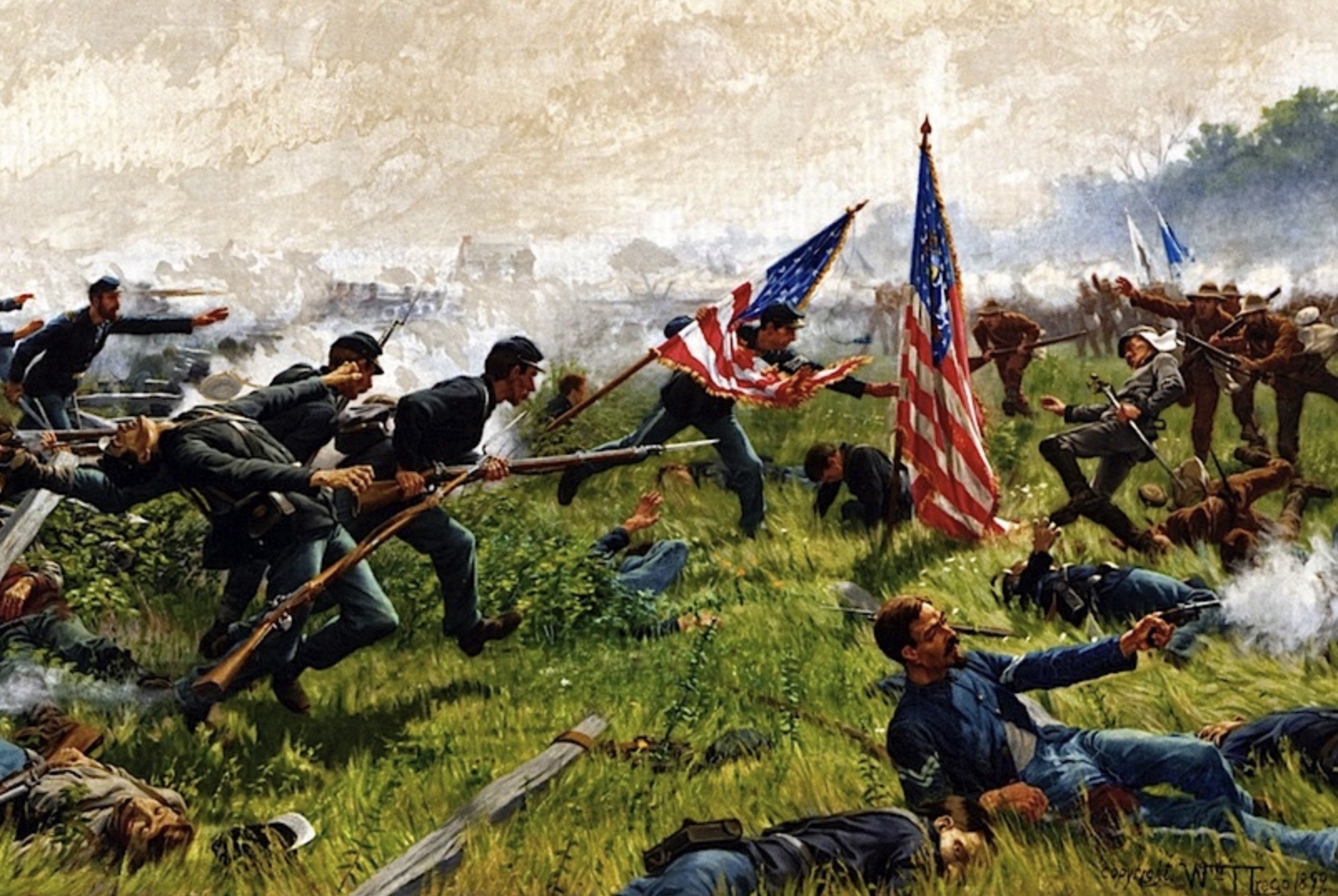
Did you know that Hiram Purcell, color sergeant of the 104th Pennsylvannia Infantry, won the Medal of Honor for his bravery during the Battle of Seven Pines? Coming under heavy Confederate fire, he had been wounded twice but still carried the flag. When he saw another regiment’s flag bearer had fallen, he went back into enemy fire, still holding his flag,and rescued the other flag from being captured. His courage inspired this painting by William Trego, called “The Rescue of the Colors.” (Wikipedia)
This is a Google map of the Seven Pines Battlefield . Use the +/- buttons to zoom in or out.
This is a 360 view of the Seven Pines National Cemetery . Click and drag to look around.




HC.2a The student will examine the influence of physical and cultural geography on Henrico County.
HC.2b The student will analyze, interpret, and demonstrate knowledge of significant historical events and ideas in Henrico County history.